How VARK Learning Enhances Study Efficiency
Many people study diligently yet feel their results don’t reflect the effort they invest. The disconnect often stems from a mismatch between how information is delivered and how the brain prefers to process it. A pragmatic way to close that gap is to examine sensory channels, reduce friction in cognition, and turn study or training time into targeted, high-yield practice. By aligning materials with perceptual strengths, learners absorb concepts faster, recall more reliably, and sustain motivation through clear wins.

At its heart, this approach recognizes that perception and memory intertwine, especially when complex tasks demand transfer from theory to practice. In many classrooms and teams, the VARK framework acts like a compass that points learners toward the most intuitive path. Rather than slotting people into rigid boxes, it encourages experimentation with modalities and combinations that fit the moment. When people map their preferences, they often use the phrase VARK learning to describe the day-to-day application of those insights. The real magic appears when these preferences shape note-taking, review cycles, presentation formats, and feedback loops.
Long before today’s learning science boom, educators experimented with sensory cues to make abstract ideas tangible. The modern articulation crystalized when researchers standardized terminology, clarified the boundaries between preference and ability, and proposed practical uses for curriculum design and coaching. Historians of education often cite the phrase Neil Fleming VARK when tracing the origins of this influential idea. That lineage matters because it links everyday classroom tactics with a lineage of observation, practical heuristics, and accessible language.
Tuning Instructional Materials With VARK Model Insights
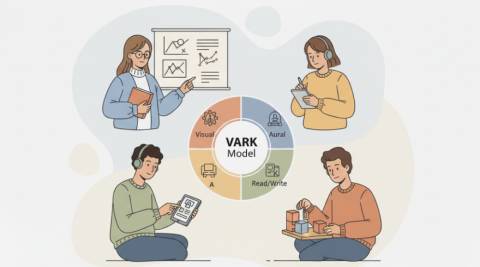
Over time, the community converged on four primary channels and a philosophy that prioritizes usefulness over dogma. Within practitioner circles, the established label VARK model helps differentiate this taxonomy from other theories. Educators typically focus on real-world outcomes: clearer explanations, smoother study sessions, and assessments that surface blind spots. When scholarly articles compare typologies, they frequently reference VARK model learning styles to emphasize the four-channel focus. Despite debates over categorization, the enduring value lies in its power to spark reflective conversation, tune instructional materials, and accelerate the feedback cycle.

Developing Flexibility Across VARK Learning Modalities
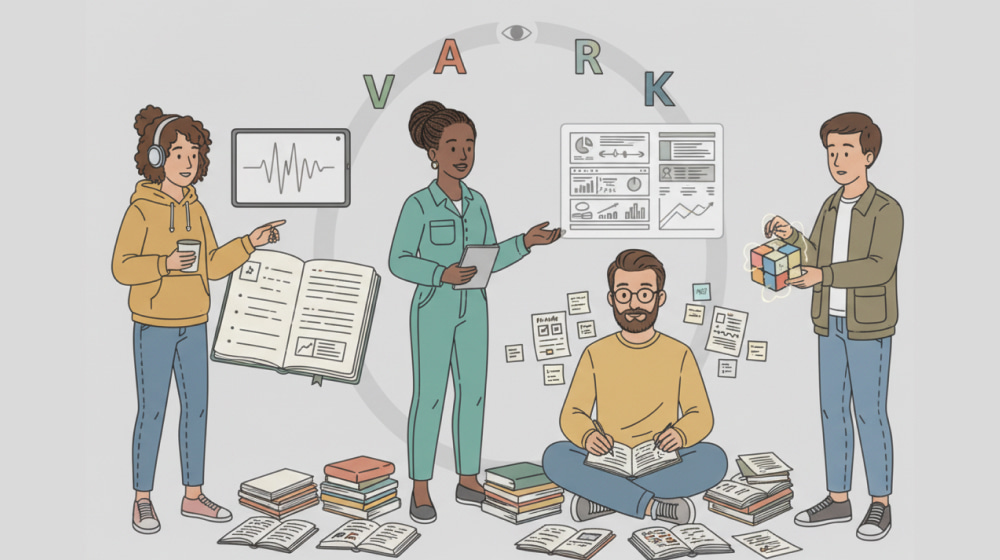
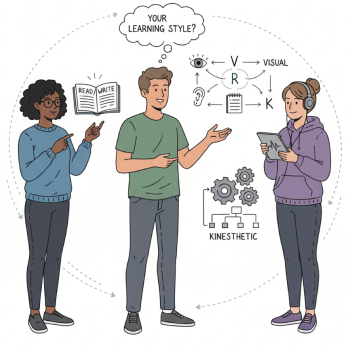
Four channels dominate practical design: imagery, sound, text-oriented methods, and hands-on exploration. No channel is “better” in the abstract; the best choice depends on goals, time, tools, and prior knowledge. For an individual learner, choosing a single dominant VARK learning style is less important than developing flexibility across modes. The key is to pick a primary entry point for new material, then reinforce it through a second channel for durable memory. Teams thrive when they curate a shared toolkit that includes diagrams, narrated walkthroughs, structured documents, and physical or simulated practice.
| Modality | Typical strengths | Rapid tips |
|---|---|---|
| Visual | Pattern recognition, spatial mapping, quick comparison | Sketch frameworks, color-code logic, turn processes into flowcharts |
| Aural/Auditory | Story structure, tone cues, conversational memory | Record summaries, teach-back aloud, join discussion-based reviews |
| Read/Write | Precise definitions, sequence control, documentation flow | Outline concepts, convert visuals to captions, build glossaries |
| Kinesthetic | Procedural fluency, situational judgment, tactile recall | Simulate tasks, handle artifacts, run short practice reps |
In program design, planners consider blends of VARK learning styles so that courses speak to multiple senses at once. Learners can start with their favored channel to build momentum, then secure retention by translating the same concept into at least one different medium. Over weeks, this rotation reduces plateaus and turns understanding into flexible skill.
Self-reflection is useful, but structured prompts speed up clarity and reduce guesswork. Before designing lessons, many educators start with a short VARK questionnaire because it sparks constructive reflection. The resulting conversation helps learners articulate frustrations, identify past wins, and select tactics to try in the next study sprint. Clear language and concise items make these tools approachable across ages and backgrounds.
VARK Tools for Teams, Training, and Onboarding
Different contexts call for different instruments, and reliability improves when tools fit the audience. Teams that want a quick snapshot sometimes prefer a lightweight VARK test instead of a lengthy interview. Large organizations often gather aggregate patterns through a streamlined VARK survey administered at onboarding. When training needs are high-stakes, leaders may order a formal VARK assessment to inform investment decisions. No matter the instrument, results work best as conversation starters rather than permanent labels.

Designing Instruction and Support
Data becomes transformative only when it shapes daily practice in concrete, repeatable ways. To track progress over time, some programs run a periodic VARK learning assessment alongside performance metrics. That pairing reveals whether study tactics, coaching moves, and content formats are translating into durable gains. Instructors can then adjust the mix of visuals, narration, documentation, and hands-on exercises to sustain momentum. Budget and time constraints shouldn’t block experimentation, especially in early pilots. If budgets are tight, departments can pilot the concept with a reputable VARK questionnaire free resource and iterate later. Where deeper diagnostics are required, facilitators sometimes deploy a validated VARK learning styles questionnaire to guide coaching. Once preferences are clearer, educators can select targeted VARK strategies that align with objectives and constraints. The aim is a living playbook that evolves through feedback, not a static rulebook.

FAQ: Practical Answers for Learners, Teachers, and Teams
The Latest News About VARK Model
Please Note
This website (varkmodel.com) is not an official representative, creator or developer of this application, or product. All the copyrighted materials belong to their respective owners. All the content on this website is used for educational and informative purposes only.