Why VARK Still Matters for Learners, Educators, and Teams
Across classrooms, training rooms, and home offices, people learn with distinctive preferences that shape how they digest new information and retain it for the long term. The VARK framework offers a practical language for noticing these tendencies and for adjusting study tactics without turning learning into guesswork. Rather than treating ability as fixed, this approach encourages flexible strategies that fit the task, the subject, and the person.
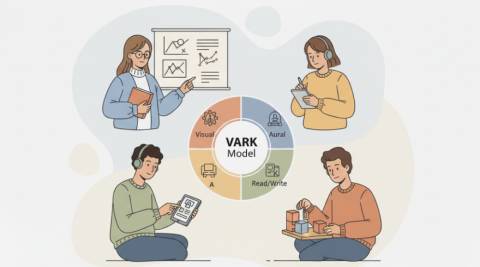
At its core, VARK highlights four modalities, Visual, Aural/Auditory, Read/Write, and Kinesthetic, that describe how people tend to process material most comfortably. Few individuals rely on only one modality, and many switch depending on context. This fluidity is a strength because it allows learners to match method to purpose, whether they are taking notes, practicing skills, or preparing to transfer knowledge on the job.
In everyday use, VARK can remove friction, shorten the path to comprehension, and increase confidence. Within that practical lens, the VARK learning styles concept encourages learners to experiment with multiple techniques before settling on a reliable toolkit that fits their goals. Teachers and trainers benefit as well, because the model suggests concrete choices, like diagrams versus demos or discussion versus reading, that ensure lessons land for more people the first time. The result is a shared vocabulary that makes personalized learning collaborative rather than solitary.
- Improves metacognition by naming preferences without boxing anyone in.
- Supports inclusive lesson design through varied inputs and outputs.
- Bridges school, workplace, and self-study contexts with adaptable strategies.
Understanding the Four Modalities and How They Work Together
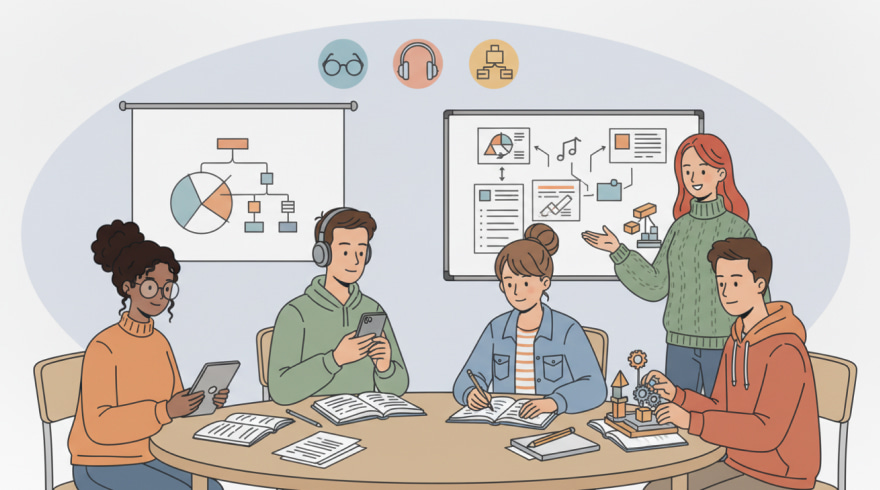
VARK is a descriptive framework, not a rigid prescription, which means it focuses on “how you approach learning” rather than “what you can learn.” Visual thinkers gravitate toward spatial layouts, maps, and process diagrams because these formats compress complex relationships into a single glance. Aural or auditory learners build memory through spoken explanations, dialogue, and sound patterns, often recalling tone and cadence alongside content.
Read/Write learners synthesize best when words are primary, using lists, headings, and well-structured notes to organize ideas. Kinesthetic learners favor concrete experience, labs, simulations, role-play, and hands-on practice that bring abstract concepts into the realm of action. Importantly, people frequently blend modalities: a coder may sketch a flowchart (visual), narrate their logic aloud (aural), write detailed documentation (read/write), and then test a prototype (kinesthetic).
Because tasks differ, the VARK model learning styles viewpoint recommends aligning the method to the outcome desired, which means text may work beautifully for definitions, while demonstrations become indispensable for procedures. Over time, learners who rotate modalities develop resilience: when one approach stalls, another opens a path forward. This adaptability makes VARK a dynamic tool for real-world learning rather than a static label applied once and forgotten.
- Visual: graphs, timelines, infographics, spatial organizers.
- Aural: lectures, podcasts, Q&A, peer explanation.
- Read/Write: outlines, glossaries, articles, annotation.
- Kinesthetic: experiments, practice sets, fieldwork, prototyping.
Benefits: From Faster Comprehension to Stronger Retention
When people tailor technique to task, they reduce cognitive overload and free up attention to focus on meaning. One immediate benefit is speed: learners grasp structure faster through their preferred entry point, whether that’s a schematic, a narrative explanation, crisp bullet notes, or a physical walkthrough. Over longer stretches, the mix of modalities acts like cross-training, deepening connections between ideas and reinforcing recall through varied cues.
Teachers and trainers gain leverage as well, because multi-modal design prevents bottlenecks in understanding. Instead of relying on a single pathway, they can layer a visual overview, a brief talk-through, a concise reading, and a short exercise. That sequencing serves diverse groups without stretching timelines. Organizations also benefit, since multimodal training cuts rework, reduces errors, and accelerates onboarding.
For many learners, the phrase VARK styles of learning becomes a reminder to experiment: translate a dense paragraph into a diagram, convert a concept into a story aloud, compile a set of distilled notes, and then build a quick model or example. These transformations make knowledge portable, because what is learned in one format can be retrieved through another. The net effect is durable fluency that stands up under pressure, on exams, in presentations, and during real-world problem solving.
- Reduces study time by aligning methods with the material type.
- Improves transfer from theory to practice through authentic tasks.
- Strengthens teamwork by giving groups a clear way to mix modalities.
How to Identify Your Preferences and Build a Personal Toolkit
Self-knowledge starts with observation: notice when content “clicks,” and record which activity preceded the insight. Did you draw a framework, talk through a sticky section, refine a set of notes, or try a hands-on run-through? Mapping these moments across different subjects helps reveal patterns without boxing you into a single identity. Keep a simple log that ties strategies to outcomes, and review it weekly to refine your approach.
Many learners explore their tendencies using a short instrument, and in that context the VARK learning styles questionnaire is a popular starting point for reflection and conversation. Regardless of the tool used, the aim is to surface preferences, not to limit experimentation. After identifying likely strengths, deliberately practice with less-preferred modalities to grow flexibility, because real-life tasks rarely arrive in perfectly matched formats.
To build a personalized system, combine a few anchor tactics you trust with “bridging” methods that convert material from one form to another. For example, outline a reading, then redraw its logic as a concept map, and finally explain it aloud to a peer. Rotate modalities during spaced review to consolidate memory pathways, and adjust your mix based on the topic’s demands rather than habit alone.
- Keep a strategy journal to capture what worked, where, and why.
- Create conversion routines: text to diagram, talk to notes, demo to checklist.
- Calibrate weekly, dropping low-value steps and doubling down on high-yield ones.
Applying VARK in Classrooms and Workplaces, with a Practical Comparison
Implementation shines when educators and teams design with multiple entry points. Start with a bird’s-eye visual, cue a short talk to anchor context, provide a concise reading to structure details, and then run a targeted activity that converts ideas into action. This layering prevents a single modality from becoming a chokepoint while keeping momentum high.
For stakeholders who track progress formally, the phrase VARK learning styles assessment often refers to reflective inventories or structured observations that inform instructional choices. In organizational training, managers sometimes invite teams to discuss modality preferences as part of onboarding and professional development, which normalizes adaptation and reduces friction in collaborative work.
When the focus is measurement across time, programs sometimes fold findings into a broader development plan, and in those cases the term VARK assessment of learning styles appears in documentation that guides coaching and follow-up actions. The goal is not to classify permanently but to suggest better first drafts of lessons, resources, and practice routines.
| Modality | High-Yield Study Tactics | Teaching/Training Moves | Common Pitfalls |
| Visual | Concept maps, process diagrams, color-coded notes | Flowcharts, timelines, anchored visuals during explanations | Over-decorating visuals without clarifying relationships |
| Aural | Peer teaching, audio summaries, Q&A drills | Think-alouds, guided discussions, brief podcasts | Lengthy lectures without interaction or structure |
| Read/Write | Structured outlines, glossaries, retrieval practice with prompts | Clear handouts, headings, checklists, text-based case studies | Copying notes verbatim without synthesis or prioritization |
| Kinesthetic | Simulations, labs, role-play, quick prototyping | Demonstrations with immediate try-it-now moments | Activities without explicit debrief or concept tie-back |
- Blend modalities intentionally to match objectives and constraints.
- Debrief every activity to surface principles and decision rules.
- Use short cycles: present, apply, reflect, and refine.
Digital Tools, Quizzes, and Everyday Practice Habits
Technology can accelerate VARK-informed learning when used with purpose. Visual learners can build concept maps with lightweight diagramming apps and export them as study sheets. Aural learners can record concise explainer audios after each study session, then replay them during commutes. Read/Write learners can maintain living documents with headings, glossaries, and self-made test items. Kinesthetic learners can run micro-simulations, practice drills, or coding katas to convert ideas into muscle memory.
For low-friction self-checks, many people start with a quick screen, and within that context the phrase VARK learning styles quiz typically refers to a short instrument that surfaces tendencies and sparks experimentation with new tactics. Regardless of the result, the habit that pays off most is rotating through modalities during spaced review, which cements understanding and multiplies retrieval cues.
Some educators describe their modality mix using a compact label, and in those discussions the wording learning styles VARK often appears as a shorthand that keeps the conversation focused on practical options rather than labels. Whichever digital tools you choose, anchor them to real tasks: transform reading into annotated outlines, reframe lectures into Q&A audio notes, rebuild complex processes as flow diagrams, and prototype procedures with brief, hands-on trials.
- Schedule modality rotations in your calendar to prevent ruts.
- Create reusable templates for outlines, maps, and debrief notes.
- Pair every study block with a quick application to validate understanding.
FAQ: Clear Answers to Common VARK Questions
Does VARK mean you should use only one modality?
No, a single preference should not become a silo, because tasks make different demands and contexts change. As you plan study or teaching, lead with your strengths and then add a secondary modality to reinforce the same idea from another angle, which increases comprehension and recall.
Is VARK a fixed label or a flexible guide?
It is a flexible guide that supports metacognition and strategic experimentation, not a permanent identity. Preferences can shift as you gain skill, encounter new subjects, or change environments, so revisiting your approach periodically keeps your methods aligned with your goals.
How should teachers use VARK without overcomplicating lessons?
Think in layers rather than one-size-fits-all: a quick visual overview, a short talk-through, a compact reading, and an activity that brings the concept to life. This sequence adds minutes, not hours, and prevents bottlenecks by offering multiple entry points.
Can VARK improve workplace training and onboarding?
Yes, teams move faster when materials include an at-a-glance map, a concise briefing, a targeted reference, and a practice scenario. This approach reduces rework, levels up new hires quickly, and supports knowledge transfer across roles.
Where should I start if I’m new to the framework?
A practical first step is to sample a few tactics from each modality for the same topic, then keep what works and discard what doesn’t. As you reflect on those trials, the question what are the VARK learning styles becomes a springboard for building a personal system that fits your tasks and evolves with your needs.