Why VARK Matters for Modern Learners
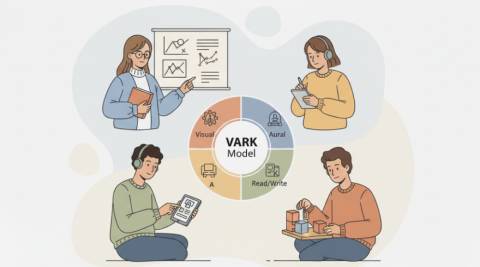
Attention is the new scarcity, and effective learning hinges on matching information with the way your brain most readily absorbs it. The VARK framework names four core input channels, Visual, Aural, Read/Write, and Kinesthetic, and helps people notice the cues that make study sessions stick. Instead of expecting one universal method to fit everyone, the approach encourages a flexible, multimodal mindset that scales from classrooms to remote teams. By understanding how you prefer to take in information, you can adjust how you listen in lectures, annotate texts, draw diagrams, build prototypes, or combine all four until understanding clicks.
Many learners discover that motivation rises when their selected tactics align with their strengths, and that frustration fades when they allocate study time to the right kinds of practice. Rather than guessing, the concise VARK questionnaire offers a quick snapshot of sensory preferences that you can test in the real world. Crucially, the results are not destiny; they are a launchpad for experimentation. Over time, most people develop a blended approach that fits different subjects, deadlines, and contexts without forcing a single rigid formula on every task. That adaptability makes the model useful beyond school, because projects at work rarely present themselves in one tidy format.
- Visual thinkers leverage diagrams, charts, color-coding, and spatial layouts.
- Aural learners benefit from dialogue, podcasts, voice notes, and spoken summaries.
- Read/Write advocates excel with outlines, glossaries, and written explanations.
- Kinesthetic performers prefer labs, simulations, manipulatives, and hands-on demos.
Clarity First: How the Model Defines Preference (and What It Isn’t)
The core promise of VARK is clarity about input preference, not a limit on potential. Preferences indicate where effort feels smoothest, yet capability grows across all channels with deliberate practice. In other words, a strong visual bent does not mean you should avoid discussion, and an audio fan can still gain power from written distillations. The biggest win is metacognition: you learn how you learn, so you can make smarter choices under pressure, triage dense material efficiently, and combine modalities when complexity spikes.
Labels can be helpful when they stay flexible, and they become harmful when treated as hard categories. Newcomers often ask, what is VARK questionnaire, and the concise answer is that it’s a brief preference inventory designed to guide strategic study. Because preferences shift with task demands, reflective learners revisit their choices after exams, presentations, or projects. They then refine study plans, swapping in flowcharts, debates, flashcard drills, or practice builds as the goal requires. This pragmatic loop, observe, adjust, test, keeps the model dynamic and prevents the stagnation that comes from thinking style equals identity.
From Insight to Action: Turning Results Into Daily Habits
Once you know your input sweet spots, the next step is to weave them into everyday routines. Start small: reformat a dense chapter into a concept map, record a brief audio recap after class, or convert notes into a one-page executive summary. Borrow strategies from other modalities when the task shifts; for example, prototype a process when words feel abstract, or narrate a sequence aloud to anchor memory with rhythm. This gradual layering builds resilience, so you’re not stranded when a course, manager, or exam imposes a fixed format.
Advisors often pair coaching with a compact survey to jump-start adoption, because structured prompts speed reflection. In university settings, the VARK learning styles questionnaire frequently anchors first-year seminars, where students practice cross-modal tactics before midterms. The same playbook helps professionals: turn a meeting agenda into a sketchnote, summarize a briefing as a micro-essay, and translate a procedure into a step-by-step walkthrough you can rehearse. By cycling through formats, you transform passive exposure into active comprehension, and that’s where durable mastery emerges.
Modalities at a Glance
Each VARK channel comes with recognizable cues, helpful tactics, and predictable pitfalls. A quick side-by-side view makes it easier to match study methods with the demands of a topic, whether you’re learning anatomy, coding patterns, or negotiation skills. Use the grid below to plan experiments for your next learning sprint, and notice where combinations, like sketching while narrating, accelerate clarity.
| Modality | Key Cues | Study Tactics | Common Pitfalls |
| Visual | Diagrams, icons, spatial relationships | Maps, infographics, color-coded notes | Over-decorating without structure |
| Aural | Conversations, rhythm, tone | Discussions, podcasts, teaching aloud | Listening without capturing summaries |
| Read/Write | Text precision, lists, definitions | Outlines, glossaries, rewriting notes | Transcription instead of synthesis |
| Kinesthetic | Movement, touch, real-world examples | Labs, demos, simulations, role-play | Doing without documenting insights |
Coaches often assign a rotating challenge, such as converting a lecture into a one-page brief and then into a storyboard, to cultivate agility across formats. That rotation guards against overreliance on a single habit and makes exam prep more robust. When a learner wants a structured nudge to get started, the straightforward VARK learning style questionnaire can anchor a weekly ritual of selecting tactics, testing them in real tasks, and logging what worked for next time.
Implementation in Classrooms, Teams, and Self-Study
Educators can integrate VARK-informed routines without overhauling an entire course. A lecture can open with a diagram, include a think-pair-share, provide a concise handout, and finish with a quick simulation. That mix respects diverse preferences while preserving lesson coherence. For personal study, learners can set a 20-minute block to transform raw notes into a diagram, a summary paragraph, and a micro-quiz, rotating through channels to deepen recall. In team settings, rotating roles, scribe, explainer, mapper, and demonstrator, ensure each modality gets airtime.
Project leaders who want a fast diagnostic often introduce the VARK learn questionnaire during onboarding so colleagues can self-select communication formats for briefs, updates, and reviews. Across a semester or sprint, that transparency cuts friction and reduces rework caused by mismatched deliverables. When deadlines tighten, teams that match the medium to the message generally ship higher-quality outputs because they encode knowledge through multiple paths rather than a single brittle channel.
Research coordinators tracking study habits across cohorts appreciate consistent instrumentation. For longitudinal comparisons where variability can creep in, the VARK learning questionnaire supports repeatable data collection while still leaving room for narrative reflections. Pairing the results with qualitative notes, like which diagram styles help, or which lab setups clarify a concept, produces a richer picture than scores alone. That combination is especially valuable when mentoring struggling students, because it surfaces actionable changes rather than abstract labels.
Access, Ethics, and Reliability
Accessibility isn’t optional; it’s the foundation for equitable learning. Provide transcripts for audio, alt text for visuals, and printable summaries that work offline. Offer choices in assignment formats where feasible to support agency without diluting standards. When coaching students on self-advocacy, remind them to request materials in formats that help them prepare effectively. Cost also matters, particularly for high school and community college environments where budgets are tight.
Many educators point learners toward open resources, and the availability of a VARK questionnaire free option can make reflection widely attainable without adding fees. For districts and companies with secure device policies, clarify where data lives, what’s stored, and for how long. Privacy notices should be written in plain language, and administrators ought to minimize collection to what’s genuinely useful for instruction instead of hoarding responses that will never be reviewed.
Convenience boosts follow-through, especially for adult learners juggling work and family. When you need quick access across laptops and phones, the streamlined VARK questionnaire online delivers frictionless completion within minutes. Combine that immediacy with clear follow-up instructions, try a diagram today, a recap tomorrow, a mini-lab on Friday, so that insight converts into practice before the glow fades. Remember that reliability grows when people act on results repeatedly, not when they take a survey once and file it away.
Common Mistakes and Pro Tips
One common error is treating preferences as excuses. A visual fan can still master spoken explanations by sketching while listening, and an audio-first learner can annotate text to slow down and integrate details. Another mistake is “format hoarding,” where students collect apps and templates but rarely use them under real conditions. Keep a short list of go-to tactics for each channel and apply them in live tasks, lectures, labs, briefs, and exams, so the habits become automatic when stakes rise. Regularly prune tools you don’t use.
In digital classrooms, logistics can make or break adoption, so integrate the link to the VARK online questionnaire into welcome messages, syllabi, and onboarding checklists. Follow it with a quick-play guide: one tactic per channel, one example, and a short reflection. After a unit test or deliverable, run a five-minute debrief to note which modality sequence worked and what to adjust next time. Over a term, those small cycles compound into durable, flexible competence that travels with learners into new roles and complex projects.
FAQ: Practical Answers for First-Time Users
Is VARK a learning style or a preference model?
It identifies preferred input channels, not fixed abilities. Treat the result as a starting point for choosing tactics, then blend modalities as task demands change.
Can my preferences change over time?
Yes. Preferences are context-sensitive and can shift with subject matter, prior knowledge, and constraints. Revisit your approach after major projects or exams.
How should instructors use results without tracking everyone into boxes?
Offer multiple representations of key concepts, encourage students to try at least two channels per topic, and assess understanding with clear criteria regardless of format.
What if I’m multimodal and score evenly across categories?
That’s common. Create a default sequence, e.g., quick read, sketch, explain aloud, and iterate. The sequence matters more than a single-channel identity.
How do I move from insight to action quickly?
Convert one lesson or chapter into two alternate formats the same day: a one-page summary and a simple diagram or demo. Capture what sticks, and repeat the best pattern next time.